
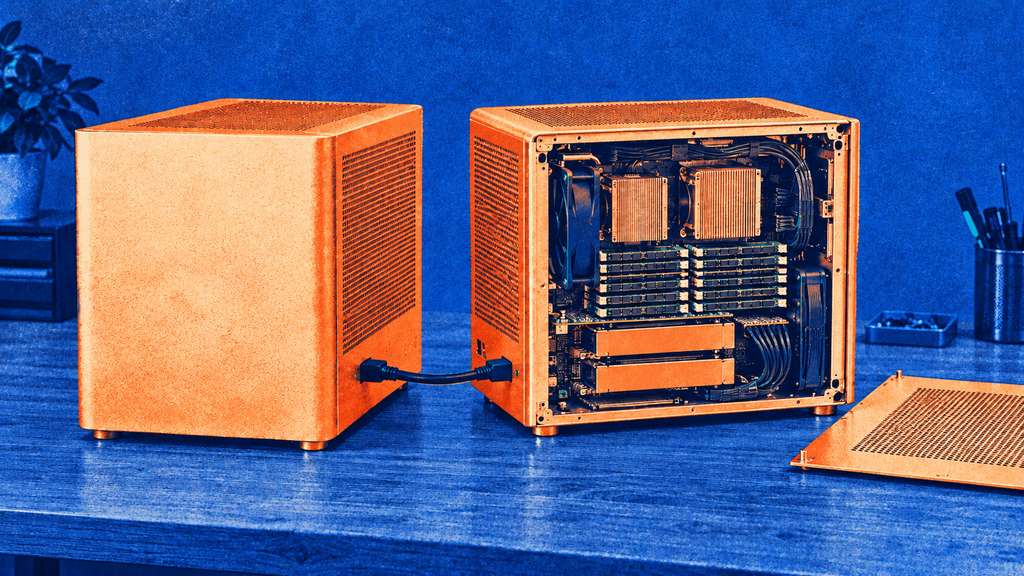
Meta released the weights for Muse Spark Open on October 15, giving developers an 816-billion-parameter AI model they can host and adapt. It takes images, audio and video alongside text and is designed for coding and tasks that use software tools. Meta’s more capable Muse Wonder remains available through company-controlled services rather than as downloadable weights, making the limit of its open-model strategy concrete.
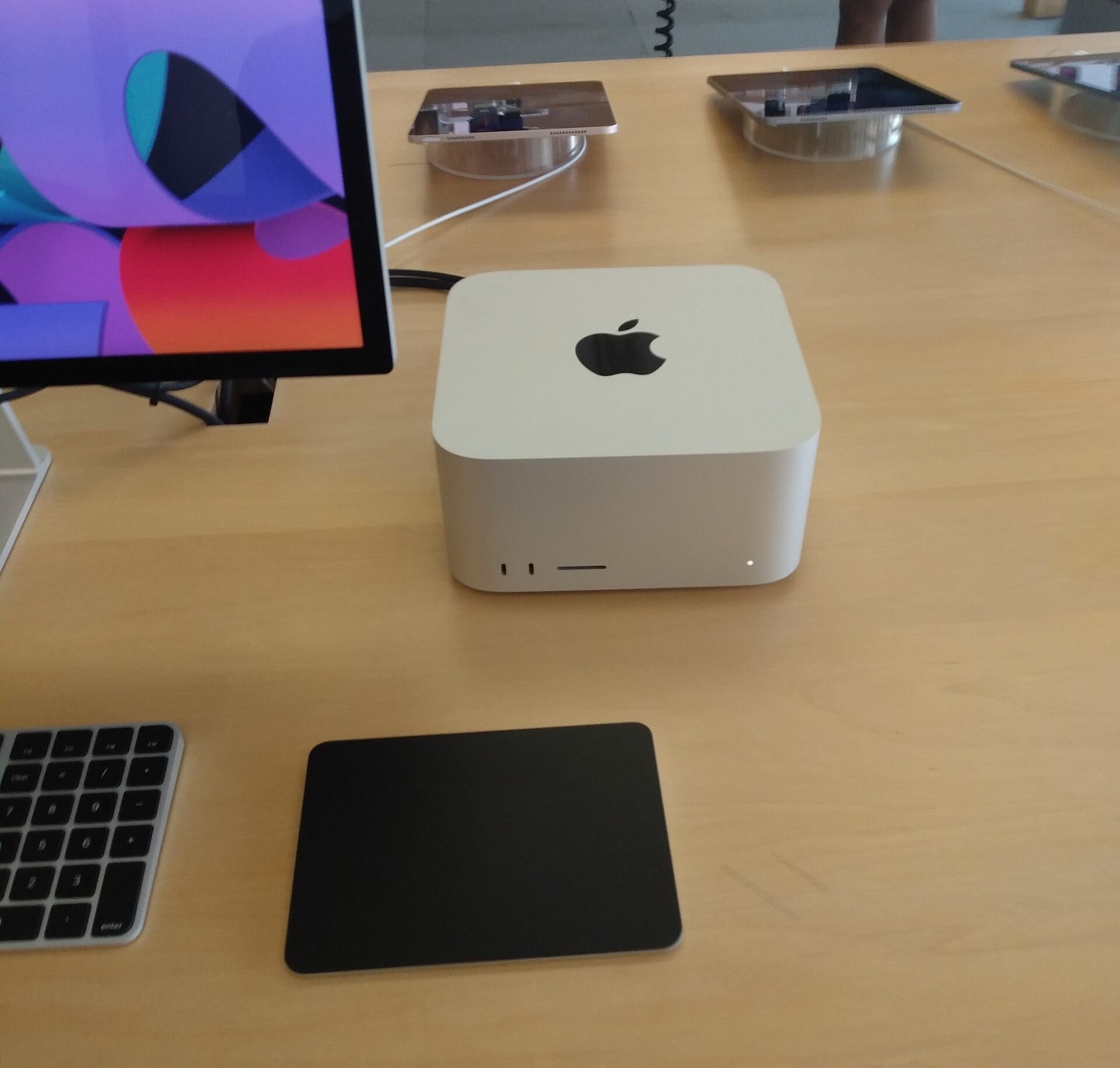
The practical catch is memory. Apple says its four-bit checkpoint occupies about 493GB before inference working memory is added. Its reference configuration therefore uses two M5 Ultra Mac Studios with 512GB of memory each. Local, in this case, means self-hosted on unusually powerful desktops.

What Meta released is a model checkpoint, not the finished Muse assistant. The weights are the numerical values learned during training. Developers can use them to build their own systems and control where those systems run, but they must supply the software, tools, permissions and safeguards around the model.
The apparent mismatch between the model’s size and its computing needs comes from its mixture-of-experts design. Only 42 billion of its 816 billion parameters activate for each token, reducing the work required to generate an answer. All of the model’s experts still have to be stored in memory.
Apple reports that its four-bit NVFP4 checkpoint occupies about 493GB. That leaves too little room on one 512GB machine for intermediate calculations and the cache used during inference. MLX therefore splits the model across two M5 Ultra Macs connected by two Thunderbolt 5 cables using RDMA, which lets data move directly between the machines’ memory. Their combined capacity remains distributed across two computers rather than becoming one physically shared memory pool. More compressed community builds can fit on one Mac, but comparable quality has not been established.
According to Meta’s model card, Spark Open produces text from text, image, video and audio inputs and has a context window of one million tokens, meaning it can consider an unusually large amount of material in one session. Developers can connect it to coding or browser tools. They still need an inference server, software that decides which action to take next, and rules governing what the system may do.
Meta says it tested entirely local workflows through Muse Code, including changes to the Ice Cubes iOS app and video editing in DaVinci Resolve. Those demonstrations show possible workflows, not how reliably the model completes representative jobs. Self-hosting can keep model processing on infrastructure a developer controls, but connected tools may still send information elsewhere.
The license permits fine-tuning, distillation, redistribution and commercial reuse. It also requires compliance with a prohibited-use policy and a prominent “Built with Muse Spark Open” notice. Groups with more than $20 million in revenue during any consecutive 12 months need a separate Meta agreement before offering the model or its derivatives as part of a model-as-a-service business. That condition does not cover internal use, research or product features that do not themselves sell model access. Downloads from Hugging Face are manually gated, although Meta lists other distribution channels.
Hugging Face reports that a two-bit version used 304GB on a single M3 Ultra and generated about 18 tokens per second. Its three-bit test used about 344GB and generated roughly 21 tokens per second after a 1,024-token prompt. The two-bit demonstration needed more steering, according to Hugging Face, and neither test establishes equivalent coding, agent or multimodal quality. The results make Apple’s two-Mac arrangement a reference configuration, not an absolute minimum.
- July 2024Mark Zuckerberg argues for competitive open releases generation after generation and predicts future Llama models will become the industry’s most advanced.
- July 2025In Personal Superintelligence, Zuckerberg says novel risks require care about what Meta will open-source, without defining a precise threshold.
- April 2026Axios reports, citing unnamed sources, that some of Meta’s largest models will remain proprietary. The reported plans were still subject to change.
- October 2026Meta releases Spark Open weights while keeping the more capable Wonder tier on its services.
The same boundary is strategic. Meta calls Wonder and Wonder Full its most capable models and offers them through the Meta Model API and Muse Code. In an interview with Bloomberg, AI chief Alexandr Wang said Meta would generally withhold its most powerful models for safety and capability reasons while continuing other open releases. That is a general policy, not a promise that Wonder’s weights will never be released.
Taken together, the record shows a substantive narrowing of Meta’s earlier ambition. Zuckerberg’s 2024 essay was a strategic argument, not a binding pledge to publish every flagship. But it predicted that future Llama models would become the industry’s most advanced and argued that Meta should remain competitive, efficient and open generation after generation. Reserving the strongest tier makes that vision harder to sustain. Because Meta signaled the change before this release, it is neither a sudden reversal nor an abandonment of open weights.
Spark Open still gives developers meaningful independence. The harder question is whether that control justifies the hardware and integration work, because moving up to Meta’s strongest model now means using the company’s service instead of controlling the weights.