
Alibaba says Qwen 4, the next generation of its AI model family, is now in training, with later Qwen 4.5 and Qwen 5 systems projected to reach 5 to 10 trillion parameters. Announced at its Apsara Conference on September 22, the roadmap pairs larger models with new chips and a substantial expansion of data-center capacity to train and run them.
The scale target belongs to those later systems, not the initial Qwen 4. Alibaba disclosed no Qwen 4 release date, access route, API price, license or capability evaluation. For developers, the announcement establishes where Alibaba is investing, but supplies no new Qwen 4 product to try or budget for.
The current reference point is Qwen3.8-Max, which Alibaba launched through its API on August 3. Alibaba describes it as having 2.4 trillion total parameters, with 95 billion activated for each token, the chunks of information a model processes. That distinction is essential to understanding the new roadmap’s much larger numbers.
Parameters are the learned numerical values inside a model. In Qwen3.8-Max’s mixture-of-experts design, each token uses a selected portion of the model: Alibaba reports 95 billion active parameters out of 2.4 trillion total. The later systems’ projected 5 to 10 trillion total does not reveal how much computation each token will require. Without active counts and measurements of the running service, it cannot establish speed, answer quality or cost.
Qwen3.8-Max also has a documented context window of up to one million tokens, the amount of material it can work with at once. Alibaba’s roadmap gives no equivalent limit for Qwen 4. Neither that capacity nor the current model’s activation pattern can be carried forward as a specification for its successor.
There is already public evidence of Alibaba’s architectural direction. Hugging Face’s Transformers documentation for Qwen4-Exp, contributed on August 26, describes an experimental design that changes how information moves through the model and how it selects relevant portions of long inputs.
Its components include GatedResidual, which controls information flowing between layers; Qwen Sparse Attention, which selects relevant blocks of tokens; and Per-Layer Embedding, which adds information derived from short token sequences. The related Qwen3.8-Flash-Next model card calls its design an experimental preview of the architecture intended to underpin Qwen 4. These documents show an effort to make scaling more efficient. They do not establish the final configuration of the Qwen 4 system now training, and the roadmap does not confirm which components it retains.
The accompanying hardware plans address the physical demands behind that ambition. Alibaba’s chip unit, T-Head, announced the Zhenwu V900 accelerator with 216 GB of memory and 1,200 GB/s of inter-chip bandwidth. Memory holds model data; bandwidth helps processors exchange it when a model runs across many chips. Alibaba targets mass production and commercial release in the first quarter of 2027.
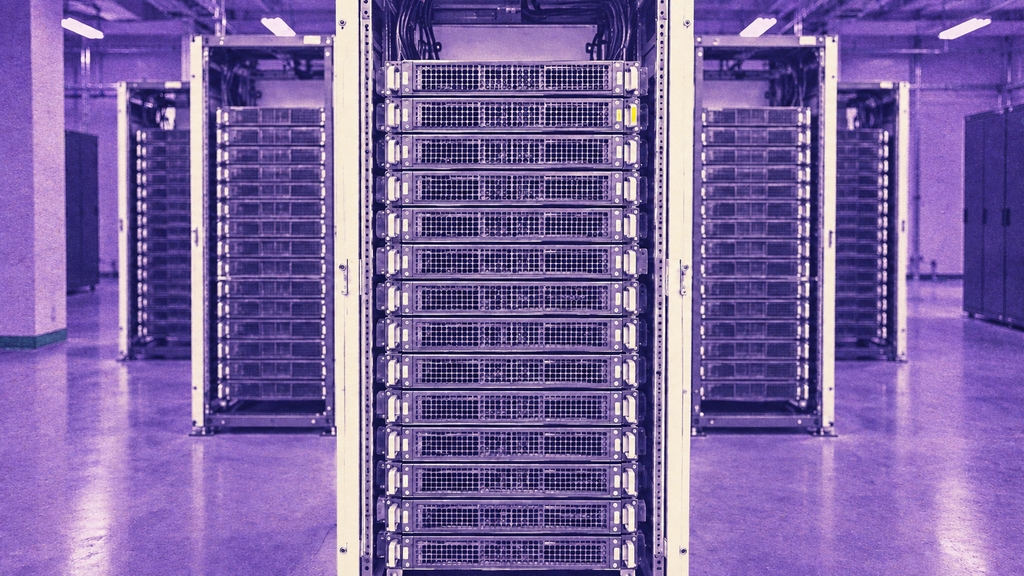
Alibaba also describes support for clusters of up to 500,000 accelerator cards and aims to operate more than 20 GW of global data-center capacity by 2032. These are future capacity targets, not installed computing resources. We read the chip and infrastructure plans as central to the model roadmap: increasing parameter counts creates little practical value if the resulting systems cannot be trained and served at workable speeds and costs.
Delivery has constraints beyond model design. AP reports that export restrictions limit access to some advanced chips, while Counterpoint analysts say chip-manufacturing capability matters even when additional computing resources can compensate for chip limitations. AP also reports Alibaba CEO Eddie Wu’s acknowledgment that global data-center supply shortages are slowing expansion. That reporting identifies execution risks; it does not independently measure the V900’s performance or establish whether Alibaba will meet its milestones.
For developers, the next useful disclosures are a release date and actual access, followed by total and active parameter counts, context limits and licensing terms. API prices or documented hosting requirements would make costs assessable. Reproducible evaluations, with model versions, tools and test settings disclosed, would show whether the added scale improves useful work.
We would keep Qwen 4 on the evaluation calendar without making a migration commitment. The evidence that should change that decision is a model developers can access and test, with terms and costs they can compare against what they use today.